


Welcome to the ultimate guide to Maine Coons — the gentle giants of the cat world 🐾
-
Physical Characteristics
-
Maine Coon Personality Traits

The Maine Coon cat is admired for far more than just its impressive size. Known for its striking appearance and gentle temperament, this breed combines strength, intelligence, and affection in a way few others can. Understanding the full range of Maine Coon characteristics helps explain why this breed remains one of the most popular and beloved in the world.
In this section, we will explore all the key Maine Coon traits in detail. We’ll cover important physical characteristics, including Maine Coon size and weight, polydactyl paws, long whiskers, tufted ears, and their signature bushy tail. We’ll also examine Maine Coon coat types and colours, highlighting the features that make their appearance so distinctive.
Beyond their physical features, we’ll look closely at Maine Coon personality traits, including their friendliness, sociability, and unique vocalisation through chirps and trills. You’ll also discover how Maine Coons compare to other cat breeds, what to expect from their lifespan, whether they are considered low-maintenance pets, and how to identify a true Maine Coon — including the only reliable way to verify pedigree.
By the end of this section, you’ll have a complete overview of the most important Maine Coon characteristics, helping you understand what truly sets this extraordinary breed apart.


.jpg)
Physical Characteristics
🐾 Maine Coon Size and Weight
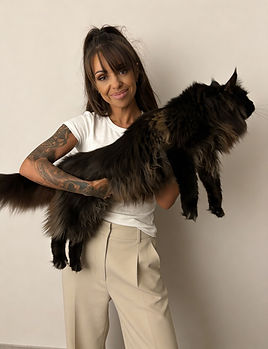
The Maine Coon is famous for being one of the largest domestic cat breeds, and it’s easy to see why. Adult males typically weigh 13–18 pounds (6–8 kg), while females are slightly smaller, usually around 8–12 pounds (3.5–5.5 kg). Some exceptionally large males can even reach 20–25 pounds (9–11 kg) — true gentle giants of the cat world!
These cats have a long, rectangular body with broad shoulders, a strong chest, and solid bone structure. Their overall length, including their long, bushy tail, can be around 30–40 inches (75–100 cm), with a shoulder height of 10–16 inches (25–40 cm).
Despite their size, Maine Coons are surprisingly agile and graceful, moving with elegance that makes them excellent climbers, hunters, and companions. One of the most unique things about Maine Coons is their slow growth. Unlike many other
breeds that reach full size in under a year, Maine Coons can take 3–5 years to reach their full adult size and weight. Watching a kitten grow into a full-grown Maine Coon is part of the magic — you really get to see the “gentle giant” personality develop alongside their physical stature. If you’re curious about how Maine Coons grow at each stage, check out our Maine Coon Growth and Development Timeline to see what to expect from kittenhood to full-grown adult. With their size, strength, and graceful proportions, the Maine Coon truly stands out as a cat that combines majesty and approachability — big, beautiful, and impossibly charming.


🐾 Polydactyl Paws: More Toe beans, to Love
About 40% of Maine Coons carry the gene for polydactylism — in other words, extra toes! Polydactyl Maine Coons are instantly recognisable by their oversized, mitten-like paws, and they’re just as adorable as they sound.
Polydactylism (when a cat has extra toes) can occur in all cat breeds, but Maine Coons have a significantly higher percentage than most. This is due to a natural genetic mutation, which is passed down from a polydactyl parent to their offspring. The gene itself is dominant, meaning it can override the usual toe count when inherited.
How many toes is “extra”?
A typical cat has:
-
5 toes on each front paw
-
4 toes on each back paw
Polydactyl cats may have 6, 7, or even more toes per paw, most commonly on the front feet. This gives them that famous “thumbed” look and earns them nicknames like mitten cats or thumb cats.
Is it normal? (Short answer: yes!)
Despite looking unusual, polydactylism is completely harmless. It doesn’t cause discomfort, doesn’t require treatment, and doesn’t affect a cat’s quality of life. In fact, many people believe extra toes can actually be an advantage.
Extra toes increase the surface area of the paw, which may help with balance and grip. Historically, it’s often claimed that cats with six or more toes move more easily on snow or uneven surfaces — something that fits beautifully with the Maine Coon’s rugged, cold-climate origins.
Any extra care needed?
Very little — just the obvious one:
-
More toes = more claws, so regular nail checks are important, especially for claws that may be tucked between toes. Extra toes means they can pick up extra debris or litter between them, it's best to check for this often aswell.
Otherwise, polydactyl Maine Coons run, jump, climb, and play just like any other cat — often with a little extra flair.
The undeniable charm factor
Let’s be honest… polydactyl paws are irresistible. Expect:
-
Giant paw prints
-
Extra-enthusiastic biscuit making
-
Paws that look like they’re wearing fluffy gloves
-
People stopping mid-conversation to ask,
-
“Wait… how many toes does your cat have?”
In short
Polydactyl Maine Coons are not rare accidents — they’re
a natural, historic, and much-loved variation within the
breed. More toes don’t make them better or worse…
just extra special.
More toes.
More balance.
More of a Maine Coon to love. 🐾💙

Maine Coon Whiskers and Facial Features🐾
One of the most striking things about a Maine Coon is their face. From the strong, square muzzle and well-defined chin to the gentle structure of the cheeks, these features give the breed its instantly recognisable expression. As Maine Coons mature, their facial features continue to develop, adding depth, character, and that unmistakable Maine Coon presence.
Key facial traits include:
-
A strong, square muzzle
-
A well-developed chin
-
Gentle but defined cheek structure
-
An expressive, alert facial expression that matures with age
Whiskers play a vital role in both appearance and everyday confidence. Long, thick, and highly sensitive, they extend beyond the width of the face and help your Maine Coon understand the space around them.
Whiskers help your cat to:
-
Judge distance and space
-
Detect subtle movement and air changes
-
Navigate confidently in low light
-
Feel secure in unfamiliar environments
Something we often mention to new families is whisker fatigue. This can occur when whiskers are constantly pressed against the sides of narrow or deep bowls, leading to sensory overload.
Signs of whisker fatigue may include:
-
Hesitation at mealtimes
-
Pawing food out of the bowl
-
Appearing fussy without an obvious reason
Simple ways to help:
-
Use wide, shallow bowls
-
Offer flat plates for wet food
-
Avoid narrow or deep feeding dishes
As your Maine Coon grows, subtle changes in their facial expression become more noticeable. Whisker position, head movement, and facial posture all play a role in how they communicate and interact with their surroundings.
You may notice:
-
Whiskers spreading forward when curious
-
Subtle head tilts and facial shifts during interaction
-
Expressive responses to new sights and sounds
In short, a Maine Coon’s face tells a story. Their whiskers and facial features are a beautiful balance of form and function, contributing to the calm confidence, intelligence, and charm that make this breed so special.


Maine Coon Tail and Ear Tufts 🐾
One of the things people fall in love with first in a Maine Coon is their tail and ears. That long, flowing tail and those tufted ears give the breed its instantly recognisable look — soft, wild, and full of character. These features don’t appear overnight either. Like everything with a Maine Coon, they develop slowly and beautifully over time.
The Maine Coon Tail
Long, fluffy, and full of personality
A Maine Coon’s tail is long and heavily plumed, often compared to a raccoon’s.
It’s not just there to look pretty — it’s part of how they move, rest, and communicate.
You’ll often notice:
-
A thick, flowing plume that becomes fuller as they mature
-
Tails used for balance when climbing or exploring
-
The tail wrapped around the body when they’re resting or feeling cosy
-
Texture that becomes softer and silkier with age
A well-developed tail adds to the calm, confident presence Maine Coons are known for.
Ear Tufts and Furnishings
Soft tufts, fluffy ears, and that classic Maine Coon look
Those little tufts at the tips of a Maine Coon’s ears — often called lynx tips — are
a favourite feature for many people. Combined with the fluffy inner ear furnishings,
they give the face its gentle, alert expression.
You may see:
-
Tufts extending from the tips of the ears
-
Fluffy inner ear hair that frames the face
-
Large ears that sit high and open on the head
-
Ear furnishings that continue to grow and fill out with age
No two Maine Coons are exactly the same, but well-furnished ears really help
define that classic, slightly wild look the breed is loved for.
Why These Features Matter
The tail and ear tufts contribute to the Maine Coon’s natural, slightly wild appearance — a look that reflects the breed’s history rather than aggression or temperament. Combined with their size and slow-maturing structure, these features give Maine Coons a rugged outline, while their behaviour remains gentle, social, and people-focused.
As they mature, the development of the tail plume and ear furnishings helps define the breed’s balance between strength and softness — one of the reasons Maine Coons feel so distinctive to live with.

Maine Coon Coats and Colors
Maine Coons come in a very wide range of coat colours and patterns, with over 70 recognised colour combinations. These colours are created by combining a small number of base colours with different patterns, silver or non-silver colouring, and varying amounts of white. Because of this, Maine Coons may appear as solid colours, tabbies, smokes, shaded coats, tortoiseshells, or combinations with white. Common tabby patterns include classic swirls, narrow stripes, spots, and ticked coats.
It is completely normal for a Maine Coon’s coat colour to change as they grow. Many kittens are born lighter or less defined and gradually develop deeper colour, stronger contrast, and clearer patterning as their adult coat comes in. Silver, smoke, shaded, and red-based coats often change the most, sometimes continuing to develop well into adulthood. Coat colour does not affect a Maine Coon’s personality, size, or behaviour — it is simply one of the many visual traits that make each cat unique.
To explore how coat colours and patterns may be inherited, you can use our kitten colour calculator to see potential outcomes based on parental genetics.
Maine Coon Personality Traits🐾
Maine Coon Friendliness and Sociability
Maine Coons are widely known for their friendly, sociable nature and are often considered one of the most people-oriented cat breeds. They typically form strong bonds with their families and enjoy being part of everyday household life.
Common social traits include:
-
A preference for staying close to their people rather than hiding away
-
Showing affection by following family members from room to room
-
Sitting nearby or beside their owners instead of demanding constant lap time
-
Enjoying gentle interaction and shared routines
Maine Coons are generally confident and adaptable, which helps them settle well into a variety of home environments.
They are often well suited to busy households because they tend to:
-
Adjust well to change when introduced gradually
-
Live comfortably with children when treated respectfully
-
Coexist happily with other cats and cat-friendly dogs
-
Communicate using soft chirps and trills rather than loud vocalization
Their friendly temperament is supported by early handling, positive social experiences, and regular interaction. Maine Coons usually thrive in homes where they receive companionship, mental stimulation, and ongoing engagement as part of the family.
Maine Coon Vocalization: Chirps and Trills
Maine Coons are known for being vocal, but in a gentle and distinctive way. Rather than loud or constant meowing, they often communicate using soft chirps and trills, which many owners find endearing and expressive.
These sounds are a normal part of how Maine Coons interact with their people and environment.
Common reasons Maine Coons chirp or trill include:
-
Greeting their owners or acknowledging attention
-
Expressing curiosity or excitement
-
Asking for interaction, food, or play
-
Communicating while following their owners from room to room
-
Reacting to birds, movement, or activity outside
Chirps and trills are usually short, melodic sounds and are often paired with body language such as tail movement, eye contact, or gentle head bumps. Each Maine Coon develops their own “vocabulary,” meaning some may be more talkative than others.
Key things to know about Maine Coon vocalisation:
-
Chirping and trilling are signs of engagement, not distress
-
Vocalisation varies by individual personality
-
These sounds often increase with confidence and bonding
-
Maine Coons tend to be communicative without being loud or demanding
Overall, chirps and trills are part of what gives the Maine Coon breed its famously social and interactive personality, helping them maintain close communication with their families.
Maine Coon vs Other Cat Breeds: Key Differences
While every cat is an individual, understanding general breed traits can be a helpful starting point when choosing the right companion for your home. Maine Coons are often admired not only for their striking appearance, but for their temperament, gentle communication style, and the way they tend to integrate into family life. The comparison below highlights some of the key ways Maine Coons commonly differ from many other cat breeds, offering thoughtful guidance to help you decide whether this remarkable breed is the right fit for your lifestyle.
Maine Coon Lifespan and Longevity🐾
Maine Coons are generally considered a long-lived breed, with many enjoying lifespans of 12 to 15 years or more when supported by responsible breeding, preventative healthcare, and appropriate long-term care.
Supporting Lifespan and Long-Term Wellbeing in Maine Coons
-
Start with responsible breeding: Health-tested parents support long-term wellbeing, though lifespan can’t be guaranteed.
-
Feed for life stage: A balanced, high-quality diet supports body condition and overall health.
-
Keep a healthy weight: Protects joints, heart health, and mobility in this large, slow-maturing breed.
-
Prioritise preventative vet care: Routine checks, vaccinations, parasite control, and dental care help catch issues early.
-
Monitor heart and joints: Vet-guided screening and early support can improve quality of life.
-
Encourage daily activity: Gentle play and movement maintain strength and flexibility.
-
Provide mental enrichment: Interaction and stimulation support wellbeing as cats age.
-
Groom regularly: Supports coat health and helps spot changes early.
-
Keep them safe: Indoor living or secure outdoor access reduces preventable risks.
-
Act on changes quickly: Appetite, behaviour, grooming, or mobility shifts should be addressed early—especially in seniors.
Every Maine Coon moves through these stages at their own pace, especially as this breed matures slowly. If you’d like a simple way to match your cat’s age to their current life stage, you can use our Age & Life Stage Calculator for an approximate human-year comparison and guidance on feeding, play, grooming, and general wellbeing.
Are Maine Coons Low Maintenance Cats?🐾
Maine Coons are often described as moderately high maintenance, but this largely depends on what you compare them to. They are not difficult cats to care for, however their size, coat type, and social personality mean they require more involvement than many short-haired breeds.
Grooming and Coat Care
Maine Coons have a long, dense, semi-water-resistant coat designed to protect them in colder climates. While their coat is less prone to matting than some other long-haired breeds, it still benefits from regular grooming.
Most Maine Coons require:
-
Brushing two to three times per week
-
Extra attention around the ruff, underarms, belly, and tail
-
Monitoring during seasonal shedding periods
Regular brushing helps prevent tangles, reduces loose hair around the home, and keeps the coat healthy and well maintained. Some individuals with thicker or cotton-type coats may require more frequent grooming.
Shedding and Seasonal Changes
Maine Coons shed year-round, with heavier shedding often occurring in spring and early summer. Consistent grooming helps manage seasonal coat changes and keeps the undercoat from becoming compacted.
Social and Emotional Needs
Maine Coons are highly social and people-oriented. They tend to enjoy being involved in daily routines and often prefer companionship over long periods of solitude. While they are independent enough to entertain themselves for short periods, they generally thrive in homes where:
-
They receive daily interaction
-
They have access to enrichment and play
-
They are treated as part of the household rather than left alone for extended hours
Their sociable nature is one of their most valued traits, but it does mean they require time and engagement.
Space and Equipment
As one of the largest domestic cat breeds, Maine Coons benefit from:
-
Sturdy, large litter trays
-
Strong, tall scratching posts or cat trees
-
Adequate floor and climbing space
Their size means they often require larger, more robust equipment than smaller breeds.
Health, Diet, and Growth
Maine Coons are a slow-maturing breed, often continuing to develop for several years. They require a nutritionally balanced diet appropriate for their life stage and size, along with routine veterinary care, parasite prevention, dental monitoring, and weight management.
Because they are larger cats, food intake and general upkeep costs may be higher compared to smaller breeds.
So, Are They High Maintenance?
Maine Coons are not high maintenance in a difficult or demanding way, but they do require consistent grooming, interaction, and appropriate space. For owners who are prepared to meet those needs, their affectionate, adaptable, and intelligent nature makes the care involved both manageable and rewarding.
How to Tell If Your Cat Is a Maine Coon 🐾 🔎 The Only Surefire Way to Verify Pedigree
Many cats may resemble Maine Coons due to their size, coat length, or ear tufts. However, appearance alone cannot confirm whether a cat is a true pedigree Maine Coon.
The only reliable way to verify pedigree is through official registration papers issued by a recognised cat registry.
A verified pedigree Maine Coon will:
-
Be registered with organisations such as the GCCF (Governing Council of the Cat Fancy), TICA (The International Cat Association), CFA (Cat Fanciers’ Association), or FIFe (Fédération Internationale Féline)
-
Have documented lineage, usually covering three to five generations
-
Be traceable to registered pedigree parents
-
Be bred in accordance with recognized breed standards
You can learn more about how we approach ethical breeding in our Breeding Standards & Ethics page.
These registries maintain official breed records and issue pedigree certificates that confirm a cat’s ancestry.
Why Appearance Isn’t Enough
Maine Coons are known for:
-
Large, rectangular body structure
-
Long, shaggy coat with a ruff
-
Tufted ears and large paws
-
A square muzzle and strong chin
However, many domestic long-haired cats can share similar features. Without registration documentation, a cat would be considered a Maine Coon–type or domestic longhair, rather than a verified pedigree.
If you’re interested in understanding recognised coat types and structure, you may find our Maine Coon Breed Characteristics Guide helpful.
What About DNA Tests?
Commercial DNA tests cannot confirm pedigree status. They may indicate breed similarities, but they do not replace official registry documentation.
For more on genetics and inheritance, you can explore our Kitten Colour Calculator & Genetics Guide.
FAQ
How can I tell if my cat is a real Maine Coon?
Only official pedigree registration papers from a recognized registry can confirm this.
If my cat looks like a Maine Coon, does that mean it is one?
Not necessarily. Many domestic long-haired cats share similar physical traits.
Can a DNA test prove my cat is a Maine Coon?
No. DNA tests cannot replace official registration documentation.
What if my cat doesn’t have papers?
Without registry documentation, the cat would be considered a domestic longhair or Maine Coon–type rather than a verified pedigree.
More Fascinating Maine Coon Facts
🐾 They’re nicknamed “Gentle Giants” — and the name genuinely fits. Big cat, soft personality.
🕰️ They can take up to five years to fully mature — which means you get kitten energy for much longer.
🎶 Many Maine Coons chirp and trill instead of loudly meowing.
🧣 Their tails are so long and fluffy they can wrap them around themselves like a scarf.
🚶♀️ They often follow their owners from room to room like a fluffy shadow.
🐶 They are one of the few breeds commonly described as “dog-like.”
🐾 Some Maine Coons have extra toes (polydactyl), giving them even bigger paws.
🏔️ They’re surprisingly athletic for their size and love climbing high.
💧 They often show curiosity about water — taps, bowls, showers… nothing is safe.
🎨 They come in over 70 recognised colour combinations.
🅼 The famous “M” on their forehead appears on all tabby Maine Coons (and all tabby cats).
🇺🇸 They are the official state cat of Maine, USA.
❄️ Their thick coat developed to handle cold, harsh weather.
🦊 They have large tufted ears that give them a wild, lynx-like appearance.
👨👩👧 Despite their size, they’re usually very gentle with children when raised properly.
🧠 They’re intelligent and can learn routines quickly — including feeding times you didn’t mean to establish.
📎 They often prefer being involved in whatever you’re doing — even if that’s just paperwork.
⬛ Their broad, square muzzle is a key feature of correct breed type.
💪 Males tend to develop impressive chest width as they mature.
🌸 They shed more during seasonal coat changes — spring fluff is real.
👁️ White Maine Coons can sometimes have blue eyes or odd eyes (one blue, one gold/green).
✨ They tend to be confident rather than shy when well socialised.
🌲 They were developed naturally, not created through recent designer breeding.
❄️ Their paws are huge — sometimes compared to snowshoes.
😸 Even when fully grown, many still act like oversized kittens.
Are You Ready to Add a Maine Coon Cat to Your Life? 🐾
Before welcoming a Maine Coon into your life, it’s worth asking yourself:
🐾 Do I have the time for daily interaction and companionship?
🐾 Am I prepared for regular grooming and seasonal shedding?
🐾 Can I provide sturdy, large equipment suited to a big breed?
🐾 Is my home environment safe and secure?
🐾 Am I ready for a long-term commitment of 12–15+ years?
🐾 Can I budget for quality nutrition and routine veterinary care?
🐾 Will this cat be a true member of the family rather than left alone for long periods?
Maine Coons thrive in homes where they are included, respected, and properly cared for. Taking the time to reflect on these considerations helps ensure a stable and rewarding future for both cat and owner.